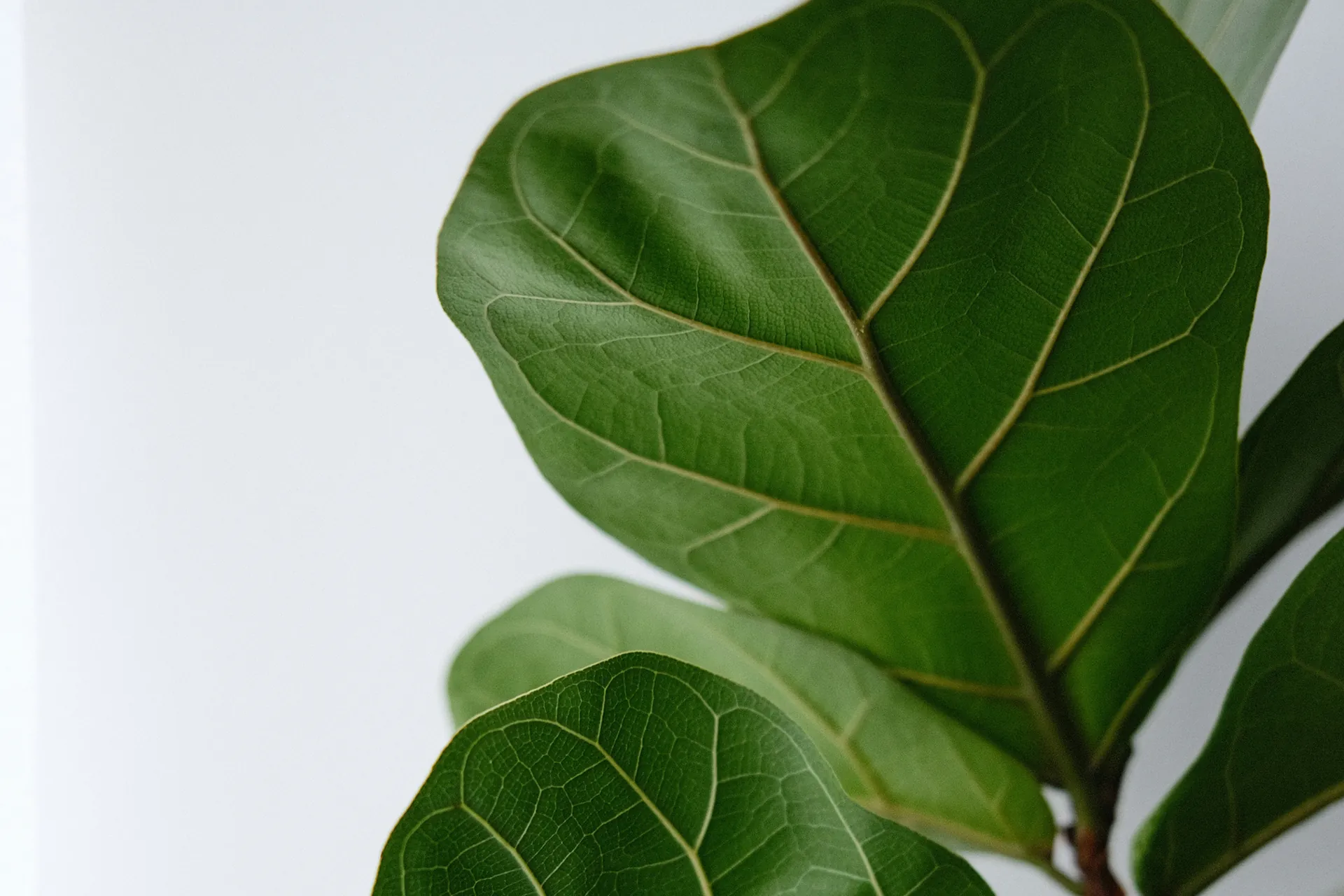
If you recently noticed a dark, ugly patch on your Fiddle Leaf Fig (Ficus lyrata), you are officially a real plant parent. We’ve all been there! These gorgeous plants are notorious drama queens, and they use their massive leaves as a billboard to tell you exactly how they are feeling.
Seeing brown spots can be incredibly stressful, but don’t panic or rush to throw your expensive plant in the trash. Brown spots are almost always related to watering habits, and once you know what to look for, the solution is incredibly simple. Let’s figure out exactly what your Ficus is trying to say.
Quick Diagnostic Cheat Sheet
| What The Brown Spot Looks Like | Most Likely Cause | The Quick Fix |
| Dark brown/black spots near the center or base of the leaf, leaves dropping | Root Rot (Overwatering) | Stop watering immediately, inspect roots, and ensure drainage. |
| Crispy, light brown spots around the outer edges of the leaves | Underwatering / Dry Air | Give the plant a deep, thorough soak and move away from vents. |
| Tiny reddish-brown dots scattered only on brand-new baby leaves | Edema (Inconsistent Watering) | Do nothing! They usually fade as the leaf grows. Fix your watering schedule. |
1. Root Rot (The Overwatering Trap)
This is the number one killer of Fiddle Leaf Figs. If your brown spots are dark, almost black, and starting near the center vein or the base of the leaf, your plant has wet feet. When a Ficus sits in heavy, soggy soil for too long, the roots suffocate and rot. The rot then travels up the stem and explodes as dark spots on the leaves, eventually causing the leaf to drop off completely.
How to fix it
First, do the finger test. Push your finger a few inches into the soil. If it feels wet or muddy, do not water it again! If the problem is severe and multiple leaves are dropping, gently pull the plant out of its pot. Trim away any mushy, black roots and repot it in fresh, chunky, well-draining soil (mix in plenty of perlite and orchid bark). Make absolutely sure your pot has drainage holes.
2. Underwatering and Lack of Humidity
If your spots are light brown, dry, and crispy—and they mostly appear on the outer edges of the leaves—your Ficus is extremely thirsty. This happens when the soil gets too dry between waterings, or if the plant is sitting directly in the path of a heater or AC unit that is sucking all the moisture out of the air.
How to fix it
Fiddle Leaf Figs don’t like little sips of water; they want a tropical downpour. Take the plant to the shower or sink and give it a deep, heavy watering until water pours out of the bottom drainage holes. Let all the excess water drain away so it isn’t sitting in a puddle. Going forward, water thoroughly whenever the top two inches of soil feel completely dry.
3. Edema (Those Tiny Red/Brown Dots)
Did a brand-new leaf just unfurl, only to be covered in what looks like a rash of tiny reddish-brown freckles? Don’t panic! This is called edema. It happens when the plant absorbs water faster than the new, delicate leaf cells can process it, causing the cells to burst. It is completely harmless and is caused by an erratic watering schedule (letting the plant get bone-dry, then flooding it).
How to fix it
You actually don’t need to do anything to the leaf itself! As the baby leaf grows and thickens, those tiny red dots will naturally stretch out and fade away until the leaf is perfectly green. To prevent it from happening on the next leaf, try to keep your watering schedule more consistent so the plant doesn’t panic-drink.
Frequently Asked Questions
Should I cut off the leaves with brown spots?
If a leaf is more than 50% brown or black, go ahead and cut it off with clean, sharp scissors. It will never turn green again, and removing it stops the plant from wasting energy on dead tissue. If the spot is small or just on the edge, leave the leaf alone so it can continue to photosynthesize.
Can I spray the leaves with water to help with crispy edges?
Misting is a popular myth, but it doesn’t actually raise the humidity long enough to help a Fiddle Leaf Fig, and leaving water sitting on the leaves can actually invite bacterial infections. If your home is very dry, it is much better to buy a small humidifier and place it near your plants.