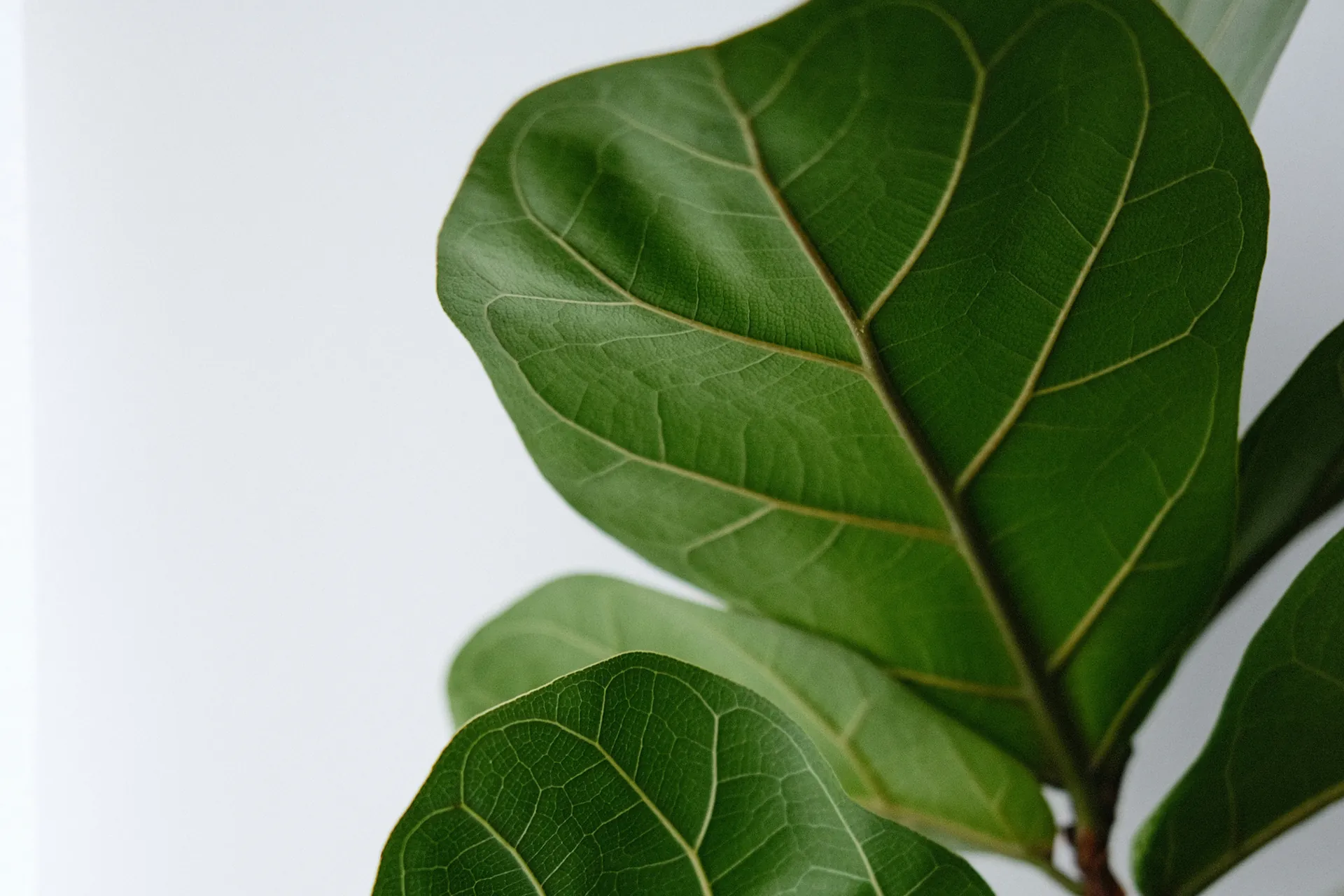
You’ve been waiting weeks for your Fiddle Leaf Fig (Ficus lyrata) to finally push out a brand-new leaf. When it finally unfurls, your excitement turns to instant panic. Instead of a flawless, glossy green leaf, it is covered in hundreds of tiny, terrifying red or brown dots. Your first thought is probably that your plant has a horrific disease or a massive pest infestation.
Take a deep breath—we’ve all been there! As plant parents, seeing weird spots on new growth is a classic rite of passage. But don’t panic. Those tiny red spots are almost certainly a completely harmless, highly common condition called edema (sometimes spelled oedema). Let’s look at exactly what is happening inside your plant and how to clear it up.
Quick Diagnostic Cheat Sheet
Before we jump into edema, let’s quickly make sure those red dots aren’t something else.
| What You See | Where It Is | The Likely Cause |
| Tiny red/brown dots embedded inside the leaf | Only on brand-new, top leaves | Edema (Harmless water pressure issue). |
| Tiny red specks that move or wipe off | Underneath older leaves, accompanied by fine webs | Spider Mites (Pests! Treat with neem oil). |
| Large, dark brown patches spreading rapidly | Edges or middle of older, lower leaves | Root Rot (Overwatering and poor drainage). |
1. What Causes Edema? (The “Water Balloon” Effect)
Fiddle Leaf Figs are notoriously dramatic about their watering schedules. Edema happens when your plant’s roots absorb water faster than the new leaves can process and release it (a process called transpiration).
Think of the cells in that delicate, brand-new leaf like tiny water balloons. When the roots pump up too much water too fast, those fragile cell walls stretch to their limit and literally burst. When the cells burst, they leave behind tiny red or brown micro-bruises. Because older leaves have tough, mature cell walls, they don’t burst, which is why you only ever see this on the newest growth.
2. How to Fix Edema and Prevent It
While edema isn’t a disease and won’t kill your plant, it is a big flashing sign that your watering routine needs a slight adjustment.
Regulate your watering schedule
Edema usually flares up when a plant gets too dry, followed by a massive, sudden soaking. Your plant chugs the water out of desperation.
How to fix it: Try to keep the soil moisture consistent. Let the top 2 to 3 inches of soil dry out completely between waterings, but don’t let the entire pot turn into a bone-dry desert before you finally give it a drink.
Boost the sunlight
Transpiration (how a plant “sweats” out excess water) is powered by sunlight. If your Fiddle Leaf Fig is sitting in a dim corner, it can’t process the water it drinks fast enough.
How to fix it: Move your plant closer to a bright, sunny window. Fiddle Leaf Figs love bright, indirect light, and giving them more sun helps them process moisture much more efficiently.
Check your drainage
If the soil stays soggy for days on end, the roots are constantly pushing water up into the leaves.
How to fix it: Make sure your pot has large drainage holes at the bottom. If your plant is sitting in a decorative pot with no holes, you need to repot it into a plastic nursery pot that slides inside the decorative one. Never let your Fiddle Leaf sit in a saucer full of standing water!
Frequently Asked Questions
Will the red spots on my Fiddle Leaf Fig go away?
Yes! As the new leaf matures, thickens, and turns dark green, it will naturally stretch out. Those tiny burst cells will heal, and the red spots will gradually fade away until they are completely invisible. You don’t need to do anything to the leaf itself.
Should I cut off the leaves with the red spots?
Absolutely not. Pruning a brand-new, healthy leaf will only stress your Fiddle Leaf Fig out more and halt its growth. The leaf is perfectly functional and will still photosynthesize beautifully. Just leave it alone and watch the spots fade over the next few weeks.